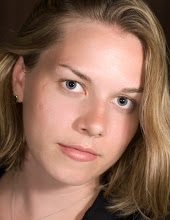
The following is my holiday letter, but it really expresses my thoughts over the past month or two.
While in the Philippines I witnessed many things, but the most beautiful was the power of hope. So often people are consumed by the news spread across the media about the problems of the world today. Violence, drugs, war, teen pregnancy, childhood obesity... This generation is slated to be the first in recorded history to have a shorter lifespan and be less successful than the generation before. That's a harsh start to a long life. We look for answers in medicine and technology, which is where we start to miss things. Is it easier to cure someone or to prevent them from becoming ill? The answer seems apparent to those of us who know the power of prevention. However, once a person is ill what keeps them holding on is a little thing called hope. We hope for a cure, for a miracle, for one more day, for something to live for, but we still hope. Well it's time our world had a little more hope.
I've seen first-hand the dramatic impact hope can have. In the Philippines I worked in two different impoverished areas. On the outside, the two areas looked about the same. The needs were the same and the people, at face value were also the same. After wondering what was missing in the second community, I realized it was hope. Following is the story of that first community.
While in Manila I was working with an organization called Gawad Kalinga. The organization has a goal to create a squatter-free Philippines. Their basic model is to tear down the slums and in their place build safe, adequate housing. Working with the beneficiaries, who are required to put in a certain amount of "sweat equity," and volunteers, they construct the housing. They are working to gain land rights in areas where people are living illegally. The basic ideal is to restore dignity to the Filipinos and eventually help to eradicate poverty throughout the world. GK works to build more than houses. They build communities. They teach livelihood skills and work with the beneficiaries to create business models to ensure their future success. In our particular project, the city was working with GK and had given them land rights so they were able to build without tearing down the peoples' houses.
I hardly know where to begin in recounting my experience. I was with a group of 12 people from 7 countries - Bangladesh, Switzerland, Sweden, Netherlands, United States, Mexico, and Germany. On our first day, we were given a tour of the slum that we were building housing for. The neighborhood was within an area they called the "Values Section" with street names like Friendship and Charity. This community lived at the end of Prosperity St. We made our way through a maze of narrow pathways between cardboard enclosures topped with corrugated metal. The pathways were covered with wrappers and trash as well as puddles of water which were likely disease-ridden. In some cases the metal on top was not sufficient, so shirts or tires were thrown on top to help keep out the elements. There was no electricity. The children were walking around barefoot and, in some cases, naked. The mothers were working on recycling or other livelihood projects in which GK had trained them. The heat was unbearable for us, yet it seemed to not affect them. The biggest thing we noticed in every person we passed was their smile. They were all smiling. They knew that we were there to help build their future homes and were filled with the promise that they would soon be able to move out of this slum - which was actually a park until it filled with squatters - and into real houses.
When we returned to the site where we were building, we all had a new appreciation for the people there. These people working side-by-side with us were helping to build their community, their future, and a future for the children. Did I not mention the children? There were hundreds of children. On our first day, we were joined by a dozen or so children with whom we played after finishing our lunches. We taught them games and songs and had some of those who spoke English help to translate. They called us "Barbies" and would feel our skin commenting on how beautiful it was and how beautiful we were. It was almost as if they were checking to see if we were real. As we returned a second and third day they began to look forward to our arrival. We would see them playing games with each other that we had taught them and we rarely would go 15 minutes without hearing a part of one of the songs we'd taught. Each day was filled with excitement at the prospect of going to this amazing place and not only helping to build houses (I did a lot of plastering) but having fun with the kids. There was a buzz around, a jolt of energy to the place that had once been so unfamiliar. We were able to work there for 8 days. At the beginning people would avert their eyes as we walked through the village that was on the way to our site or would occasionally venture to look at us. By the end of the week we were greeted every day with choruses of "hello" and "Goodbye! See you tomorrow!" by adults and children alike. It was easy to see that these people all had hope. They had something to look forward to and knew the lives of their children were going to be improved dramatically due to the efforts of GK.
On our final day, we had a day of just playing and celebrating. We played with the kids to start off the day and later they performed for us. The kids from the neighboring school did little dances and songs for us. Some of the beneficiaries did a Filipino folk dance. Then the beneficiary kids came up to perform. These were "our" kids - the ones we saw every day and had come to love. They got up and performed... one of the songs we'd taught them! When they finished one of their mothers explained "this was the first thing you taught our children and they wanted to let you know that they'll never forget you." Some of the mothers came up to us to tell us how much they'd miss us and that they'd never forget us, that we'd made such an impact on their children in just the short time we were there. They explained that they have hope that with other people like us in the world that we can make it a better place.
When we left there were lots of tears. There were tears of joy for the work that had been done and tears of sadness for the friends we won't see for a long time. They may not forget us, but we will never forget them. Whenever I think of the Philippines, I'll see the faces of Louie and Len Len and Winsy and Camille. I'll know what poverty looks like, yet how hope can shape the lives of those in poverty.
~Molly
If you're interested in Gawad Kalinga, you can find out more at gawadkalinga.org So far their model has been successfully replicated in parts of India and Africa in an effort to eradicate poverty and homelessness.
Showing posts with label Cast B 2008. Show all posts
Showing posts with label Cast B 2008. Show all posts
Sunday, January 18, 2009

Sunday, November 9, 2008
Su Fu and So Forth...
Right now we are in Sioux Falls, SD. Our lovely fall weather has passed and we have officially hit winter. Today started off at 45 degrees and by the end had fallen to 23 degrees. Needless to say, I'm glad I had my mom bring my winter coat when she came.
Tonight I went with my host mom and roommate (Nathalie from Sweden) to the Ahn Trio concert. The Ahn Trio consists of three sisters - one cellist, one pianist, and one violinist. All are Juilliard trained and they play chamber music by contemporary composers. That was probably the most interesting part, the fact that the oldest composer represented by their pieces was Richard Rogers. Their performance was dynamic and passionate and they were all very talented. The theatre we were in, the Washington Pavilion, had some of the most amazing acoustics I've ever heard. Every pluck of the strings could be heard from the top of the balcony (or so I assume... We were in the 8th row Orchestra). Each note resonated and you could feel it in your chest. It was almost like the music became the air and you were just breathing in the harmonies. I enjoyed it immensely.
One of the basic concepts of improv theatre is pattern recognition. What is funny in a scene is when a specific action or theme returns and is played out in a parallel fashion. This is a skill improvisors must work to develop with the understanding that the more they are able to perceive what is unusual or funny about a scene, the better they are able to portray it to the audience. Those improvisors who are seen has being very perceptive, sharp, and funny are the ones who see the patterns easily and are able to play them. Why, you may ask, do I bring this up? I was thinking about it this evening when I got to the concert. This is my second tour with UWP. In my first tour, I only went to one concert... The 5 Browns. Five brothers and sisters, all Juilliard trained, who traveled together and performed. I'm just wondering what the third beat of this pattern is going to be, because I'm sure we're all aware of the comic rule of three.
We have our show in Sioux Falls tomorrow afternoon. We've already sold out the floor (2,000 seats) so it will be a nice big audience. We leave Monday for North Platte, NE and then the following Monday head to the Philippines. It's a wild ride and I'm hanging on tight.
~Molly
Tonight I went with my host mom and roommate (Nathalie from Sweden) to the Ahn Trio concert. The Ahn Trio consists of three sisters - one cellist, one pianist, and one violinist. All are Juilliard trained and they play chamber music by contemporary composers. That was probably the most interesting part, the fact that the oldest composer represented by their pieces was Richard Rogers. Their performance was dynamic and passionate and they were all very talented. The theatre we were in, the Washington Pavilion, had some of the most amazing acoustics I've ever heard. Every pluck of the strings could be heard from the top of the balcony (or so I assume... We were in the 8th row Orchestra). Each note resonated and you could feel it in your chest. It was almost like the music became the air and you were just breathing in the harmonies. I enjoyed it immensely.
One of the basic concepts of improv theatre is pattern recognition. What is funny in a scene is when a specific action or theme returns and is played out in a parallel fashion. This is a skill improvisors must work to develop with the understanding that the more they are able to perceive what is unusual or funny about a scene, the better they are able to portray it to the audience. Those improvisors who are seen has being very perceptive, sharp, and funny are the ones who see the patterns easily and are able to play them. Why, you may ask, do I bring this up? I was thinking about it this evening when I got to the concert. This is my second tour with UWP. In my first tour, I only went to one concert... The 5 Browns. Five brothers and sisters, all Juilliard trained, who traveled together and performed. I'm just wondering what the third beat of this pattern is going to be, because I'm sure we're all aware of the comic rule of three.
We have our show in Sioux Falls tomorrow afternoon. We've already sold out the floor (2,000 seats) so it will be a nice big audience. We leave Monday for North Platte, NE and then the following Monday head to the Philippines. It's a wild ride and I'm hanging on tight.
~Molly
Subscribe to:
Posts (Atom)